About Me
Hi, I'm John and I'm passionate about gamification.
I'm particularly interested in gamifying education.
My Objective
My goal is to join a company that would be interested in creating a Module-Embedded Gameplay (MEG) platform.
I believe that creating a MEG platform would add substantial value to a company.
I would like to be an "intrapreneur" within a company to help it innovate and create new products.


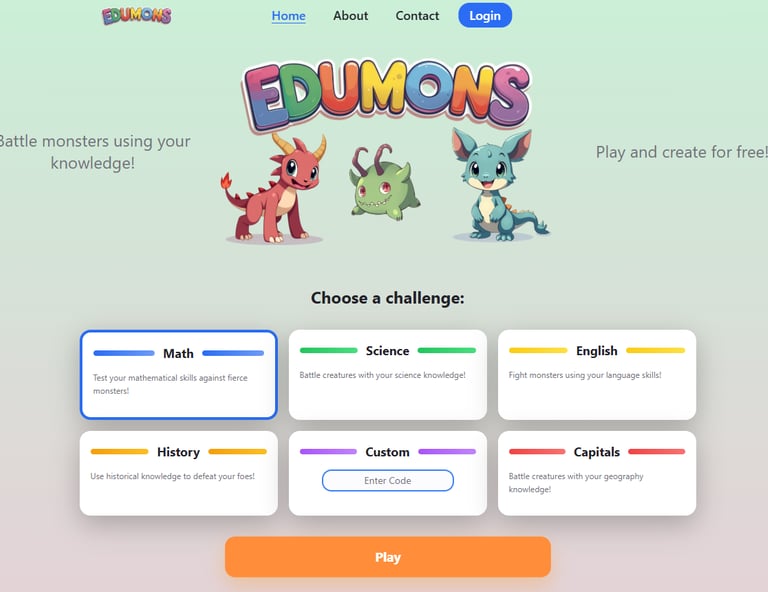
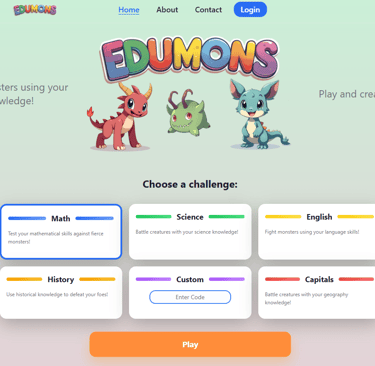
I designed Edumons, an educational game and platform in which students fight monsters by answering academic questions.
To play the game, visit the Edumons website. You can do this by clicking the image to the right or visiting this link: https://edumons.com
This Pokémon-inspired game could be viewed as a rudimentary implementation of MEG.
In the case of Edumons, players damage monsters and receive experience by correctly answering questions.
Educational Gaming Platform
Projects
Music Animation Project
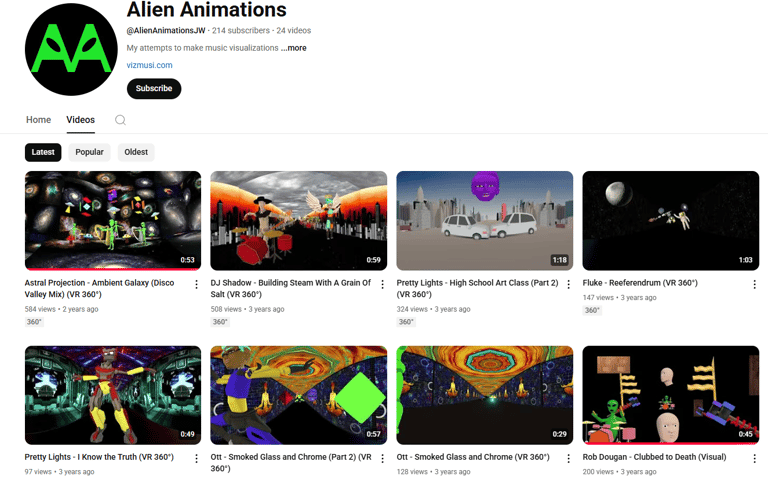
In this YouTube project, I created animations to go along with music. I used the 3D software Blender to make many of them. I also used a virtual reality software called Tvori to make some.
My goal in this hobby project was to visualize music by matching sounds with visuals. Synching the visuals and sounds proved to be challenging. However, I enjoyed the process of learning Blender and Tvori to make these animations. I may continue working on this project in the future.
You can visit the project YouTube channel by clicking the image to the right.
Hobbies
As you may have guessed, I enjoy playing video games.
I also love to play tennis and spend time with my friends and family.


Research
For my graduate capstone project in Public Administration, I conducted UX research about the Edumons game. I surveyed students to evaluate how different game elements impact educational outcomes. The goal was to understand how specific game elements—such as combat, leveling, badges, and interface design—affect key outcomes like motivation, engagement, and enjoyment.
You can read or skim my MPA Capstone Paper by clicking the image to the right.
After surveying students, I examined the relationships between game features and student outcomes. To do this, I used quantitative analysis techniques, including correlation and regression. The findings were used to identify which elements most effectively support learning, and will guide future design improvements.
Education
Master of Public Administration
Kennesaw State University 2023-2025
4.0 GPA
Accepted into Public Administration Honor Society
Google UX Design Certificate
Google / Coursera 2022 - 2022
Bachelor of Political Science
Kennesaw State University 2016-2019
3.94 GPA
Graduated Summa Cum Laude
Leadership Studies minor
Experience
Founder and Lead Designer
Edumons
2022 — Present
Leads conceptual design and user experience (UX) strategy for an educational video game aimed at enhancing student learning outcomes
Conducts UX research by surveying students about how different game elements improve educational outcomes
Designs and refined intuitive user interfaces tailored to meet the needs of both student players and teacher facilitators
Leads iterative design processes based on user feedback from students and educators, ensuring accessibility and usability
Digital Marketer and Event Organizer
Chess Club and Scholastic Center of Atlanta
2021
Conducted mass email and social media marketing
Organized chess events including tournaments and camps for children
Created engaging graphics for YouTube videos
Provided excellent service for customers and managed data entry and databases
Real Estate Agent and Georgia Realtor
2020-2021
Managed open houses at homes of sellers, assisted other agents with real estate marketing and advertising
Earned Georgia Real Estate License by passing exams and became licensed Georgia Realtor
Developed knowledge of the real estate industry as well as sales, customer service, and communication skills